
01What the BGH decided
In May 2018, the Federal Court of Justice (case no. VI ZR 233/17) made it clear that even if permanent recording without a reason breaches data protection law, the footage can be admissible as evidence in civil proceedings. That's why dashcams are common in Germany, and why the right settings matter.
02The difference: event-based instead of non-stop
What's legally problematic is permanently storing footage without a reason. The solution is loop recording: the camera constantly overwrites its footage and only saves a clip permanently when it detects an event, such as an impact, hard braking or a press of the button. That way, in normal use, there are no stored recordings of uninvolved road users.
That's exactly how we set up every dashcam we install: short event clips instead of a permanent archive. It's also how most branded cameras come out of the box; it just shouldn't be changed by accident.
03Parking mode: allowed, but with good judgement
Many cameras offer a parking mode that triggers on vibration or movement. With a hardwired installation, the camera gets protected permanent power with a low-voltage cut-off for this, so the battery stays safe. The same rule applies: short event-based clips, not a continuous film of the car park.
04What matters during installation
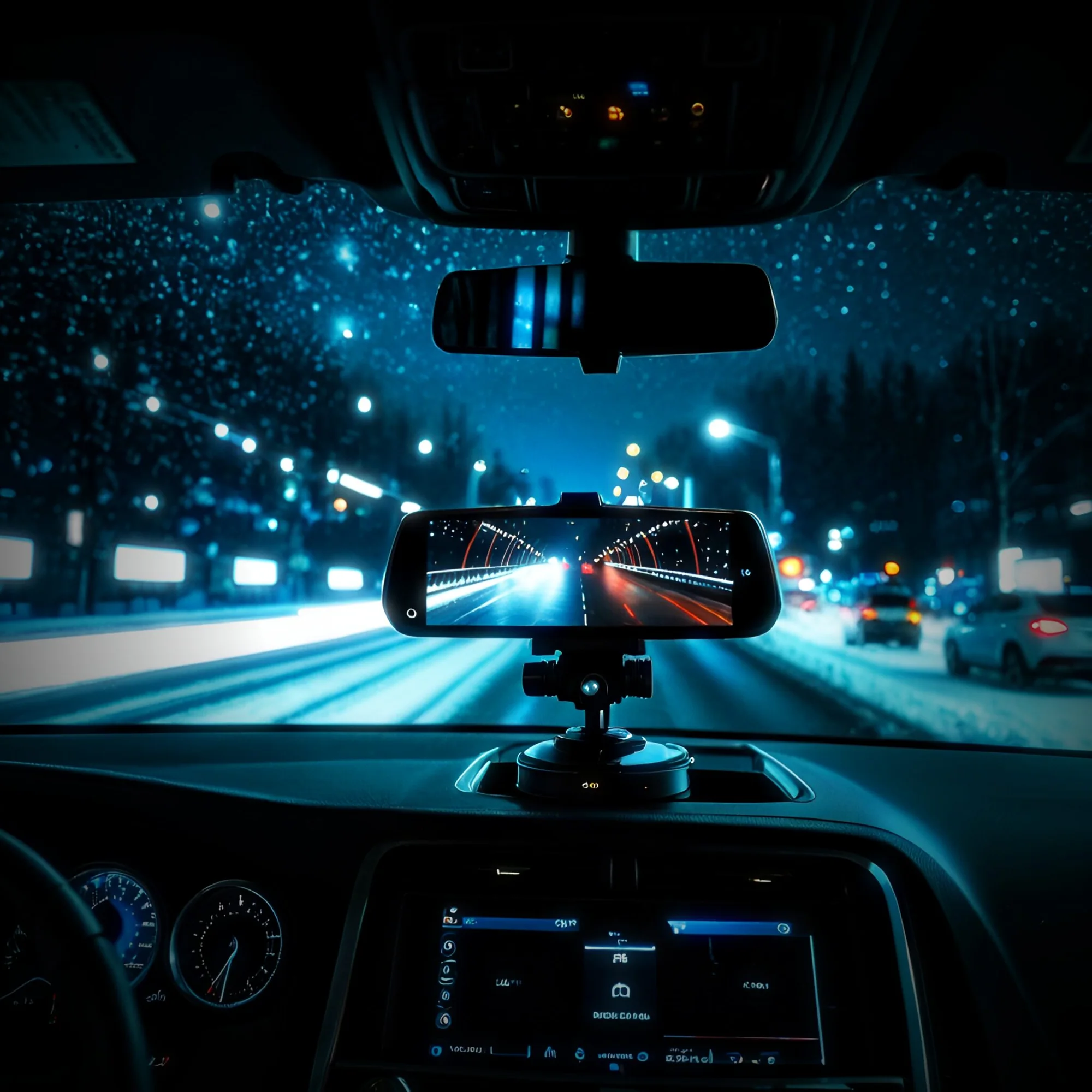
The camera must not obstruct the driver's view; it belongs in the area behind the rear-view mirror. With a hardwired installation, the cable runs out of sight behind the headliner and A-pillar to the fuse box. Important: in most cars the A-pillar contains a curtain airbag, so routing cables there belongs in expert hands.